
Classical vs Contemporary Pilates: Which Is Right for You?
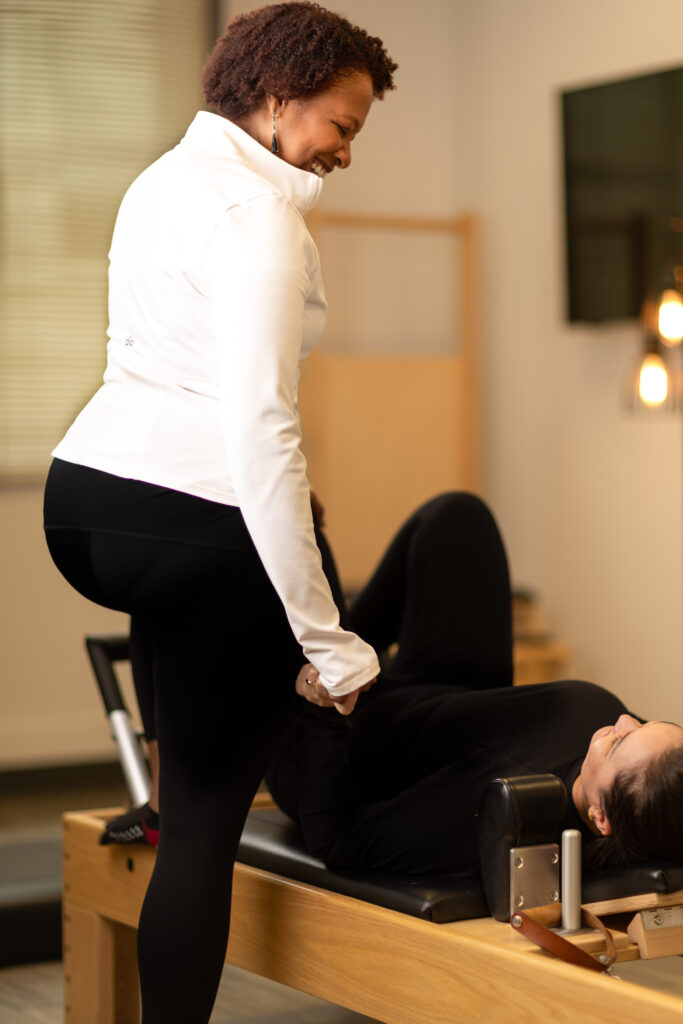
A pillar guide from Grasie Souza — 5th-generation Classical Pilates Diplomada and founder of Pilates Carioca Wellness and Training, Victoria, BC.
If you have searched for a Pilates studio lately, you have probably run into two words that get used interchangeably — but should not be: Classical and Contemporary. Some studios advertise Classical. Others say Contemporary. Many say neither and leave you guessing.
For someone who came to Pilates because of chronic back pain, menopausal changes, diabetes-related mobility loss, high cholesterol, or the simple fatigue of sitting at a desk for ten hours a day, that confusion matters. The style of Pilates you choose will shape your results, your safety, and the long-term relationship you build with your body.
This guide walks you through the full story — where both approaches came from, how they actually differ, what current peer-reviewed research says, and how to decide which path is right for you. I will also share why, after training in the full Classical lineage, I teach the method exactly the way Joseph Pilates designed it.
A Shared Origin: Joseph Pilates and the Birth of “Contrology”
Every Pilates class you have ever taken — Classical, Contemporary, Reformer-based, mat-based, rehab-oriented, athletic — traces back to one man.
Joseph Hubertus Pilates was born in Germany in 1883. A frail child with rickets, asthma, and rheumatic fever, he spent his life studying how the body moves and how movement can heal. During World War I he was interned in England, where he began refining a system of exercises for fellow detainees using bed springs and improvised apparatus — the early ancestors of today’s Reformer, Cadillac, and Wunda Chair.
In 1926, Joseph and his wife Clara immigrated to New York City and opened a studio on 8th Avenue in the same building as the New York City Ballet. Dancers, boxers, injured athletes, and everyday New Yorkers became his clients. He called his method “Contrology” — the complete coordination of body, mind, and spirit. He taught it in a specific order, on specific apparatus, with a specific intention behind every exercise.
Joseph Pilates died in 1967 at age 83. He left behind two books — Your Health and Return to Life Through Contrology — a studio, a small circle of dedicated students, and no formal succession plan. What happened next split the Pilates world in two.
After 1967: Two Paths Forward
The Classical Path — Preserving the Method
When Joseph passed, his most senior students — a group now known as the “Pilates Elders” — carried the work forward. Among them, one woman became the undisputed keeper of the flame: Romana Kryzanowska.
Romana first came to Joseph in 1941 after an ankle injury, introduced by the legendary choreographer George Balanchine. She trained directly under Joseph and Clara for more than two decades, and in his final years Joseph named her director of his New York studio. She then dedicated the next 60 years of her life to teaching the method exactly as she had learned it — the same order, the same apparatus, the same intention. Romana passed away in 2013 at age 90.
Every Classical Pilates teacher practicing today traces their lineage back through Romana or one of the other Elders. This is what Classical Pilates means: a method preserved through an unbroken chain of teachers, generation by generation, from Joseph himself to the studio you walk into today.
When I describe myself as a 5th-generation Diplomada, that is what I am describing — a documented line of transmission reaching back to the source.
The Contemporary Path — Adapting with Science
Other branches of the family took a different route.
In 1988, former ballet dancer Moira Merrithew and her husband Lindsay opened a studio in Toronto after Moira had trained with Romana in New York. Working with physical therapists, sports medicine professionals, and biomechanics researchers, they built what became STOTT Pilates — a contemporary, anatomically-based approach that modified the original method in light of modern spinal rehabilitation science.
In 1989, Rael Isacowitz founded BASI Pilates (Body Arts and Science International) in California, blending Joseph’s principles with contemporary movement science and a focus on precision and flow. Other contemporary schools followed — Polestar, Peak, Balanced Body, Fletcher — each with its own philosophy.
Contemporary Pilates generally shares several markers:
- Neutral spine: A neutral spine position (rather than the classical imprinted or “flat back”) based on current spinal research.
- Modified repertoire: New exercises and variations drawn from physical therapy and rehab.
- Flexible sequencing: Exercises may be combined in any order for a given client goal.
- Supplemental props: Foam rollers, bands, small balls, and arcs are often added.
- Redesigned apparatus: Reformers with updated spring systems, extra straps, and padding.
Contemporary Pilates is not “worse” or “less authentic.” It is a legitimate evolution driven by smart, well-credentialed people. But it is a different thing from what Joseph Pilates built — and that distinction matters when you choose a studio.
Side-by-Side: Classical vs Contemporary at a Glance
| Element | Classical Pilates | Contemporary Pilates |
|---|---|---|
| Lineage | Direct, traceable line back to Joseph Pilates through the Elders (especially Romana Kryzanowska). | Evolved from Joseph’s method, integrating physical therapy and exercise science from the 1980s onward. |
| Exercise order | Fixed, intentional sequence — each exercise prepares the body for the next. | Flexible — exercises are selected and ordered per client goal. |
| Spine position | Imprinted or “flat back” in many exercises. | Neutral spine by default. |
| Repertoire | Original 34 mat exercises plus the original Reformer, Cadillac, Chair, and Barrel repertoire. | Original repertoire plus modified and newly added exercises. |
| Apparatus | Original Gratz-style equipment, unchanged specifications. | Redesigned Reformers, extra springs, plus added props (foam rollers, bands, arcs). |
| Philosophy | Preserve the method as Joseph designed it. | Adapt the method using modern biomechanics and rehab science. |
| Founding schools | Romana’s Pilates · Power Pilates · True Pilates | STOTT · BASI · Polestar · Peak · Balanced Body |
| Best fit for | Clients seeking the original, intact method — discipline, long-term mastery, full-body integration. | Clients seeking highly individualized modifications for acute injury or post-surgical rehab. |
What Does the Research Actually Say?
For clients in chronic pain — one of the groups I most commonly serve — the evidence is encouraging, no matter which branch of Pilates they practice.
A 2022 network meta-analysis in the Journal of Orthopaedic & Sports Physical Therapy compared the most common exercise interventions for chronic low back pain and concluded that Pilates, mind-body, and core-based exercises were the most effective for reducing pain, while Pilates, strength training, and core-based exercises produced the biggest reductions in disability.
A 2023 systematic review and meta-analysis in MDPI’s International Journal of Environmental Research and Public Health confirmed that Pilates delivers meaningful improvements in pain and functional disability in people with chronic low back pain, and — crucially — that those benefits persisted through follow-up periods after the intervention ended.
A 2025 randomized controlled trial showed that even low-intensity Pilates produced outcomes comparable to high-intensity Pilates at six- and twelve-month follow-up, with fewer adverse events. For people who are deconditioned, post-menopausal, or managing chronic conditions, this is significant: you do not need to grind yourself into the floor to benefit.
The research rarely distinguishes between Classical and Contemporary in its study design. What it consistently shows is that Pilates done well, under qualified supervision, helps people hurt less and move better. Both paths lead there. The question is which path fits you.
Who Each Approach Serves Best
Classical Pilates is likely the right fit if you:
- Want the original method, taught the way Joseph built it.
- Value a repeatable, progressive system — you walk into class and know what to expect.
- Are committed to long-term practice and mastery rather than a short-term fix.
- Appreciate tradition, lineage, and a direct relationship with the source material.
- Are generally healthy or managing manageable chronic conditions and want a method that builds strength, mobility, posture, and breath control over months and years.
- Respond well to discipline and structure — the same order, the same exercises, progressively deeper.
Contemporary Pilates may be a better fit if you:
- Are in acute rehabilitation from a specific injury or surgery and need a program built around that injury.
- Prefer a highly individualized session where the exercise list changes every time.
- Come from a strong physical therapy background and want modifications layered into every movement.
- Are working with a specific diagnosis that your contemporary-trained instructor is equipped to address.
Both approaches, taught well, are safe. Both help. The difference is philosophical, not safety-based.
Why Classical Matters — My Perspective
I am a 5th-generation Diplomada in the Classical lineage. That means my training traces directly back through four teachers to Joseph Pilates himself. I chose this path — and I chose to keep teaching it here in Victoria — for specific reasons.
First, the order is medicine. Joseph designed each exercise to prepare the body for the next. The warm-up mobilizes the spine. Footwork organizes the legs and pelvis. The Hundred fires up the breath and the powerhouse. Every exercise has earned its place in the sequence, and removing or reordering exercises changes how the body responds. Clients with chronic pain, menopausal stiffness, or long hours at a desk benefit especially from this predictable, cumulative progression.
Second, the apparatus is part of the method. Joseph’s Reformer, Cadillac, Chair, and Barrel were engineered with specific dimensions, spring tensions, and geometry. They are not generic exercise equipment — they are precision instruments. Classical studios use Gratz-style equipment built to the original specifications because the exercises and the apparatus were designed as one system.
Third, the method works for the people I serve. My clients are women navigating menopause, people managing diabetes or high cholesterol, desk workers with chronic back and hip pain, and individuals rebuilding mobility after years of being sedentary. They do not need a new kind of Pilates invented every session. They need a proven, time-tested system they can return to week after week, year after year — one that builds on itself and gives their bodies a language to speak.
Fourth, tradition is an act of respect. Joseph Pilates spent six decades refining this work. Honoring his method is not nostalgia — it is stewardship. It protects something that works so the next generation can access it too. When I teach you The Hundred, I am teaching you the same exercise Romana taught her students, and that Joseph taught her.
That is what Classical offers: a direct line from your body to a 100-year-old system of movement that has been tested, preserved, and passed down — not diluted.
How to Choose Your Path
Ask any studio three questions before you book:
- Is your training Classical or Contemporary? If you do not get a clear answer, that is your answer.
- What is your lineage? A Classical studio will tell you which Elder their training traces back to. A Contemporary studio will name a specific school — STOTT, BASI, Polestar, and so on.
- What does a typical session look like? Classical sessions follow a recognizable structure. Contemporary sessions are more variable by design.
Neither answer is wrong. But you deserve to know what you are walking into.
Ready to Experience Classical Pilates in Victoria?
If this guide resonates — if you want a method that is traceable, structured, and built to serve your body for the long term — I would love to introduce you to Classical Pilates in person.
At Pilates Carioca Wellness and Training in Victoria, BC, I teach Private, Semi-Private, and Online sessions grounded in the full Classical lineage. My clients come to me with chronic pain, post-menopausal stiffness, diabetes-related mobility limitations, and long histories of desk-bound workdays — and they leave moving taller, breathing deeper, and trusting their bodies again.
I have created a special Intro Package for new private clients — the ideal way to experience Classical Pilates one-on-one in a studio that honors the method and the person in front of me.
Sources
- Power Pilates — Classical vs. Contemporary Pilates: What’s the Difference? — https://www.powerpilates.com/learn/what-is-the-difference-between-classical-and-contemporary-pilates
- Pilates Method Alliance — Blending Tradition with Innovation — https://www.pilatesmethodalliance.org/blog/blending-tradition-with-innovation
- Pilates Method Alliance — About Pilates — https://nationalpilatescertificationprogram.org/PMA/PMA/About/About-Pilates.aspx
- Pilates Anytime — Romana Kryzanowska Timeline — https://www.pilatesanytime.com/Pilates-History/622/Romana-Kryzanowska-Timeline
- Romana’s Pilates International — Romana Kryzanowska — https://www.romanapilatesinternational.com/our-team/romana-kryzanowska/
- Wikipedia — Romana Kryzanowska — https://en.wikipedia.org/wiki/Romana_Kryzanowska
- Cheshire Pilates — STOTT Pilates History — https://www.cheshirepilates.com/stott-pilates-history
- Wikipedia — Stott Pilates — https://en.wikipedia.org/wiki/Stott_Pilates
- Wikipedia — Pilates (definitions section) — https://en.wikipedia.org/wiki/Pilates
- JOSPT (2022) — Best Exercise Options for Reducing Pain and Disability in Adults With Chronic Low Back Pain: A Network Meta-analysis — https://www.jospt.org/doi/10.2519/jospt.2022.10671
- MDPI IJERPH (2023) — Efficacy of Pilates on Pain, Functional Disorders and Quality of Life in Chronic Low Back Pain: Systematic Review and Meta-Analysis — https://www.mdpi.com/1660-4601/20/4/2850
- PMC (2023) — Effect of Pilates Training on Pain and Disability in Chronic Low Back Pain: Systematic Review and Meta-Analysis — https://pmc.ncbi.nlm.nih.gov/articles/PMC10164513/
- PMC (2025) — Preventing Chronic Low Back Pain: The Role of Pilates in Subacute Management — Randomized Controlled Trial — https://pmc.ncbi.nlm.nih.gov/articles/PMC12276093/
- Online Pilates Classes — The Complete Guide to Joseph Pilates’ 34 Mat Exercises — https://onlinepilatesclasses.com/blog/the-original-34-classical-pilates-mat-exercises/
- Pilatesology — Classical Pilates Exercise Order — https://pilatesology.com/2022/08/classical-pilates-exercise-order-exercise-lists-sequences/
The history of Pilates
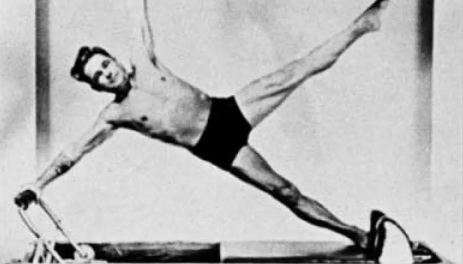
Joseph Pilates created his exercise system while he was held in a British internment camp during World War I. He named his method “Contrology.” After the war, he went to the United States and opened a studio in New York City. There, he taught his method to dancers and athletes. Pilates has changed over time and now comes in different forms. Some popular ones are mat Pilates (done on the floor), Pilates with machines (reformer, tower, cadillac or trapeze, guillotine, wunda chair and many others. There are also various styles of Pilates, like classical Pilates that follows Joseph Pilates’ original exercises, and contemporary Pilates that uses modern techniques. No matter which type you do, Pilates is a great way to get fit, become more flexible, and make your core muscles stronger. It also helps you pay more attention to your body and how it moves.
The principles of Pilates
Pilates follows six main ideas: concentration, control, centering, flow, precision, and breathing. These principles aim to help people create a strong link between their mind and body, benefiting their physical and mental health. Pilates exercises are gentle and don’t stress the body, making them suitable for everyone, no matter their age or fitness level. These exercises enhance strength, balance, and flexibility, without putting too much strain on your heart and lungs. Pilates can also fix your posture, align your body correctly, and reduce the risk of getting hurt. Keep in mind, though, that Pilates isn’t a quick solution; you need time and commitment to enjoy all the good effects. Through regular practice, you’ll likely experience better overall fitness and well-being.